Refreshing Our Expertise in Flood Hazard Design
At Civil Renewables, we believe that staying current with evolving standards and best practices is essential to delivering safe, resilient, and innovative solutions. Recently, our team engaged in continuing education focused on flood hazard design—an area critical to protecting communities and infrastructure.
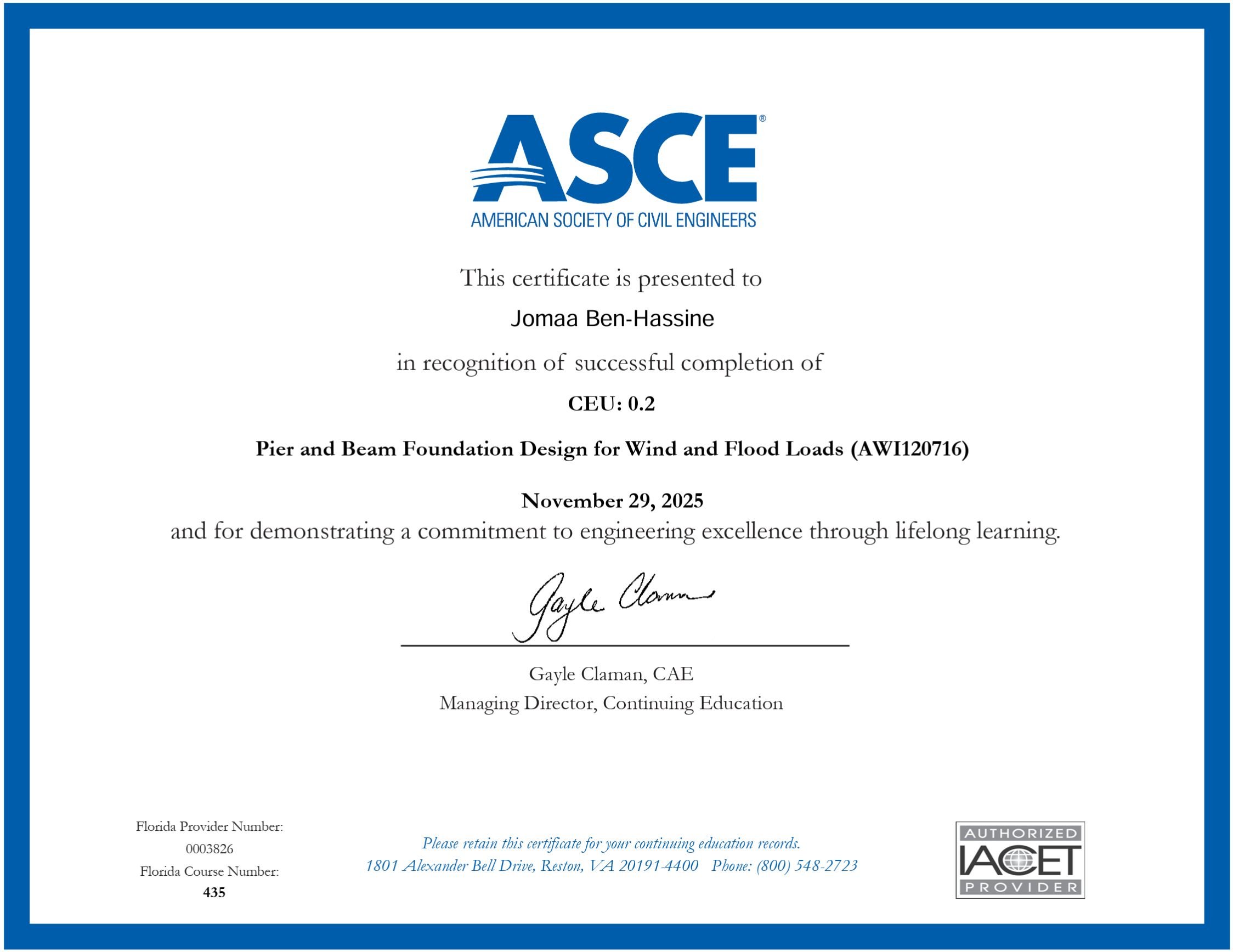
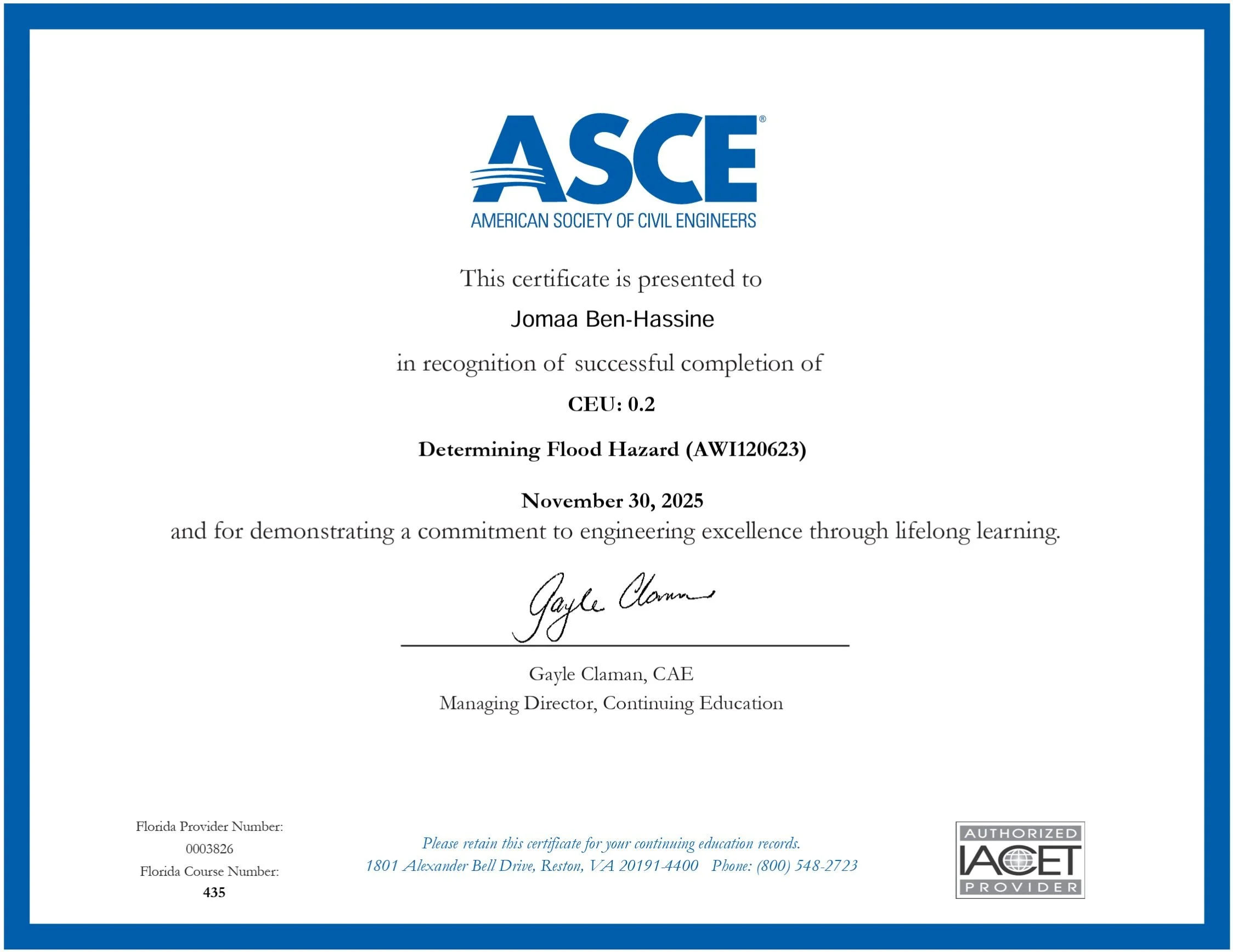
Through two specialized courses offered by the American Society of Civil Engineers (ASCE), we strengthened our understanding of flood-related challenges and design strategies. The first course, Determining the Flood Hazard, provided in-depth guidance on identifying and assessing flood risks using the latest data sources, including FEMA flood insurance maps and resources from national organizations such as the U.S. Army Corps of Engineers (USACE). This knowledge ensures that our projects incorporate accurate hazard assessments from the outset.
The second course, Pier and Beam Foundation Design for Wind and Flood Loads, explored advanced techniques for designing foundations that can withstand combined wind and flood forces. This training is particularly relevant for projects in coastal and flood-prone regions, where structural integrity and safety are paramount.
In addition to these courses, we reviewed recent updates in key standards, including ASCE 7-22 and ASCE 24, which set the benchmark for flood-resistant design. These standards, along with guidance from FEMA and other national agencies, form the foundation of our approach to resilient engineering.
While our company does not specialize in flood hazard assessments, we recognize the importance of understanding these risks. By increasing our awareness and integrating flood considerations into our designs, we strive to deliver solutions that prioritize safety, durability, and compliance—especially in environments where water-related hazards can have significant impacts.